Shein’s Design Process: How They Spot Trends in 3 Days
Advertisement
Shein’s Design Process: A 2026 Look at How They Identify Emerging Trends in 3 Days
Shein’s design process identifies emerging trends in remarkably fast cycles—sometimes in as little as 3 days. The company’s approach combines data analytics, social media monitoring, and rapid prototyping to stay ahead of consumer demand. This exploration reveals the mechanics behind one of fashion’s most responsive design operations.
Shein has fundamentally transformed how the fashion industry thinks about trend identification. The ultra-fast fashion giant operates on a timeline that would have seemed impossible a decade ago, turning cultural moments into downloadable styles at unprecedented speed. Understanding how they achieve this requires examining the intersection of technology, data science, and design intuition that defines their approach.
The company’s ability to spot and act on emerging trends within a 72-hour window represents a significant shift in retail strategy. This isn’t simply about speed for its own sake—it’s about creating a direct feedback loop between what’s happening in culture and what’s available in the virtual storefront.
The Data Foundation Behind Trend Spotting
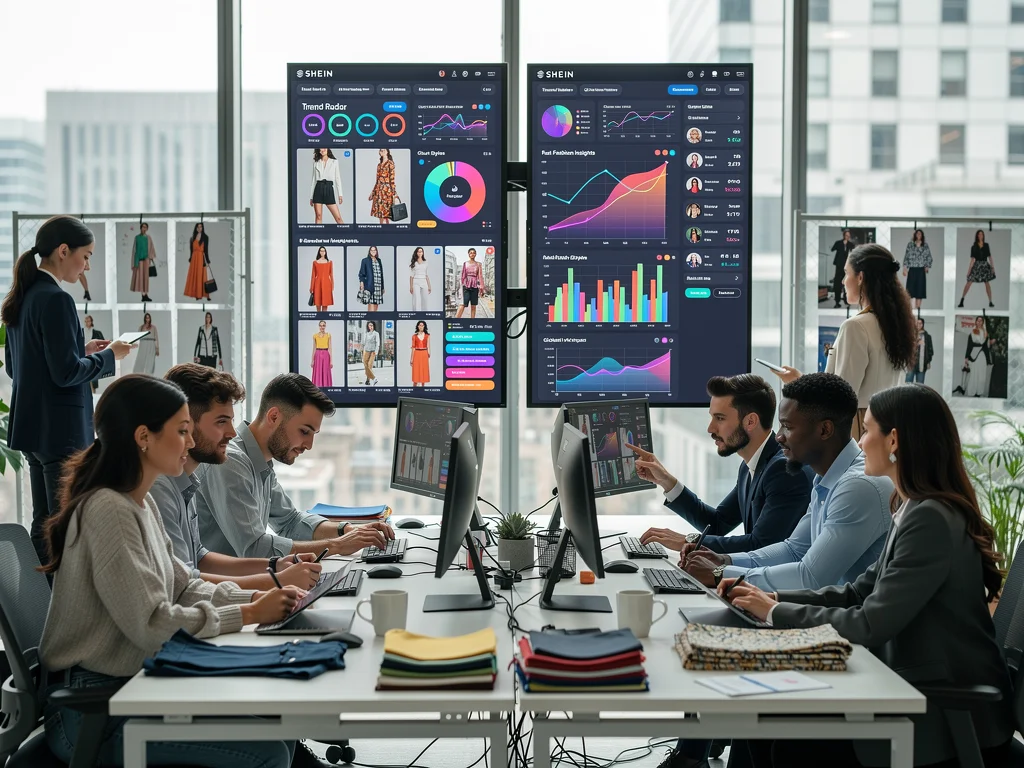
At the core of Shein’s design process lies an sophisticated data infrastructure that monitors multiple signals simultaneously. The system tracks search queries across major platforms, analyzes hashtag performance on social media, and processes sales data from the company’s extensive inventory. This creates a real-time picture of what’s capturing consumer attention.
The data team doesn’t simply react to what’s already popular—they look for emerging patterns that suggest future demand. When a particular color, silhouette, or style element begins showing up in niche communities, the algorithms flag these signals for human review. This combination of machine learning and human curation ensures nothing promising slips through the cracks.
Advertisement
Key Data Sources
The trend identification system pulls from several critical sources. Social media platforms provide the earliest signals, with particular attention paid to emerging creators and micro-influencers who often set the tone before mainstream adoption. E-commerce search data reveals what consumers are actively seeking, even when those products don’t yet exist in the catalog.
- Real-time social media hashtag tracking across platforms
- Search query analysis from major e-commerce engines
- Internal sales velocity metrics and inventory movement
- Marketplace competitor analysis and pricing data
- Creator partnership performance metrics
The Three-Day Timeline Explained
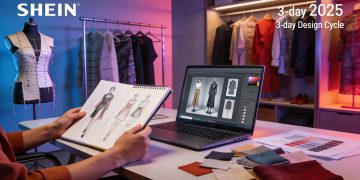
When the data signals align on a particular trend, the design process kicks into high gear. Day one focuses on validation and concept development. Designers review the supporting data, examine visual references, and begin sketching initial concepts. This phase ensures the trend has sufficient momentum to justify production.
Day two involves rapid prototyping and sample creation. The design team produces multiple variations, testing different colorways, fabric combinations, and styling approaches. This iteration happens digitally first, with AI-assisted design tools helping to visualize options quickly before any physical samples are created.
Advertisement
Day three is about refinement and production readiness. The winning concepts move into final specification, with sizing, pricing, and marketing positioning all determined in this compressed timeframe. The entire process reflects a philosophy that treats trend identification as a continuous cycle rather than a seasonal event.
Speed Without Compromise
Critics often question whether such rapid development compromises quality or originality. The company addresses this by maintaining a clear distinction between trend interpretation and outright copying. Designers are trained to take inspiration from emerging aesthetics while creating original interpretations that fit the brand’s identity and customer preferences.
Human Expertise in an Automated World
Despite the heavy reliance on data, human judgment remains essential to Shein’s design process. Data can identify what’s gaining traction, but it takes experienced designers to understand how to translate those signals into products that resonate with customers. The human element also provides cultural context that algorithms alone cannot grasp.
The design team includes specialists focused specifically on trend analysis and forecasting. These individuals bring backgrounds in fashion history, cultural studies, and retail strategy. Their role involves questioning the data, adding nuance to the recommendations, and ultimately approving which trends move forward to production.
This hybrid approach—data-driven identification with human-curated interpretation—creates a system that’s both efficient and emotionally intelligent. It acknowledges that fashion operates in a space between pure logic and cultural expression.
What This Means for the Industry
Shein’s approach has forced competitors to reconsider their own timelines and processes. Traditional fashion houses that once operated on six-month cycles now face pressure to respond more quickly to emerging trends. This shift has created what many analysts call a permanent state of competitive acceleration in the industry.
The implications extend beyond just speed. When trends can be identified and addressed in three days, the entire relationship between brands and consumers changes. Customers increasingly expect their digital conversations and social media activities to be reflected in available products within weeks, not seasons.
This expectation has created a new standard in fashion retail—one that values responsiveness as much as originality. Brands that cannot match this pace risk becoming irrelevant to consumers who have grown accustomed to seeing their interests immediately reflected in the marketplace.
Looking Ahead: Future Implications
As technology continues to evolve, Shein’s design process will likely become even more sophisticated. Emerging tools in artificial intelligence and predictive analytics promise to make trend identification faster and more accurate. The three-day window may eventually shrink further, though the fundamental challenge of balancing speed with creativity remains.
The bigger question involves sustainability and consumer behavior. Rapid trend cycles have drawn criticism from environmental advocates who point to the waste generated by ultra-fast fashion. How the industry addresses these concerns while maintaining the responsiveness consumers have come to expect will shape the next chapter of fashion retail.
For now, Shein’s design process stands as a case study in how data, technology, and human creativity can combine to create something genuinely new in retail. Whether this model represents the future of fashion or a temporary phenomenon remains to be seen, but its impact on the industry is undeniable.