Retro Resurgence 2026: 5 Decades Shaping Today’s Fashion
Advertisement
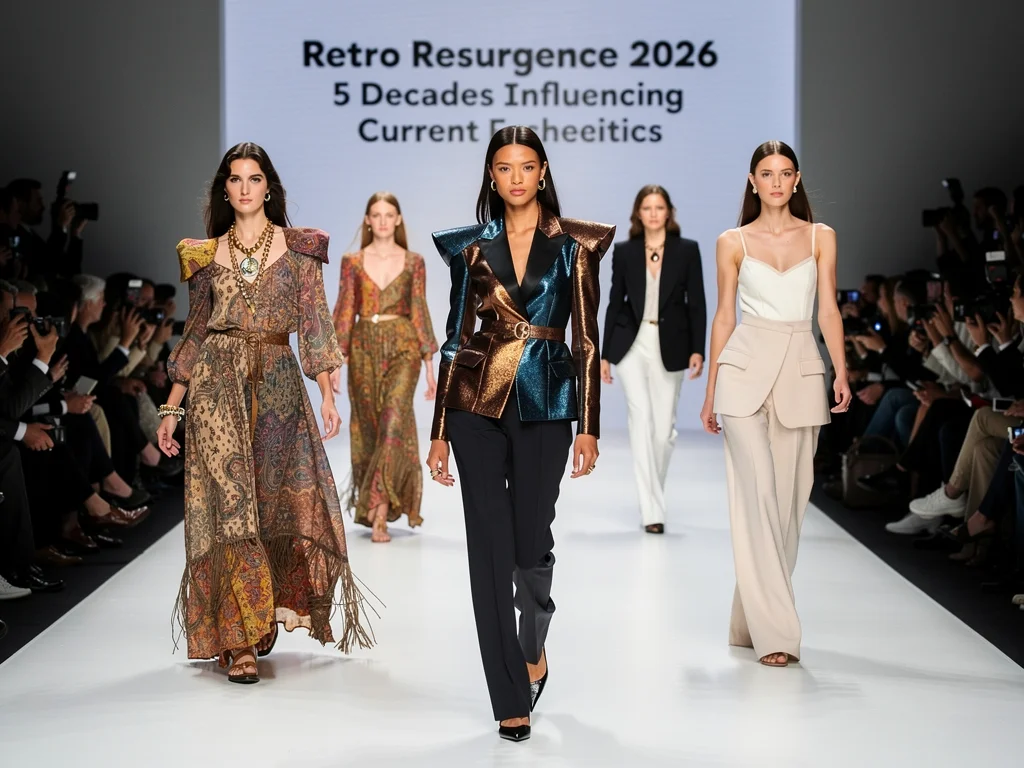
Fashion cycles back with Retro Resurgence 2026: 5 Decades Influencing Current Fashion Aesthetics. Designers blend 70s boho, 80s bold, 90s minimal, and Y2K energy into fresh modern looks. The result is a cultural moment redefining what vintage means in 2026.
Retro Resurgence 2026: 5 Decades Influencing Current Fashion Aesthetics
Fashion has always been a mirror of nostalgia, but 2026 marks a turning point. The Retro Resurgence 2026: 5 Decades Influencing Current Fashion Aesthetics movement is not simply about wearing old clothes. It is a deliberate reinterpretation of five distinct decades, each bringing something unique to today’s wardrobes. From the free-spirited 1970s to the digital-born Y2K era, these influences are merging in ways no one predicted.
What makes this moment different from previous vintage waves is the intentionality behind it. Brands are not just reissuing archive pieces; they are studying the cultural context of each era and recreating silhouettes that feel relevant now. This is fashion with a memory, and consumers are responding enthusiastically.
The 1970s Bohemian Revival
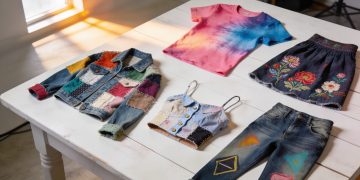
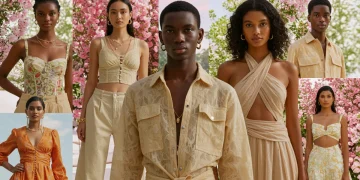
The 1970s have returned, but not as a direct copy. This time, the bohemian aesthetic of the decade is being filtered through a contemporary lens, emphasizing sustainability and individual expression. Flowing fabrics, earth tones, and intricate embroidery are appearing on runways and in street style alike.
Designers are drawing from the decade’s spirit of rebellion while updating materials to meet modern ethical standards. Organic cottons, recycled fabrics, and natural dyes bring the 70s ethos into 2026 without the environmental cost of the original movement.
Advertisement
Key Elements Returning
The most visible 70s elements include bell-bottom trousers, suede fringe details, and the return of the peasant blouse. These pieces are being styled with modern basics—structured coats over flowing dresses, or platform boots paired with tailored shorts. The contrast creates visual interest while honoring the original era.
- Flowing maxi skirts in natural fabrics
- Suede fringe bags and jackets
- Earth tone color palettes
- Vintage-inspired floral prints
1980s Power Dressing Reimagined
The 1980s brought bold shoulders, vivid colors, and unapologetic glamour. In 2026, these elements are being stripped of their excess and rebuilt for a more refined sensibility. The power suit is back, but it speaks a different language—one of confidence without the theatricality.
Advertisement
The Retro Resurgence 2026: 5 Decades Influencing Current Fashion Aesthetics phenomenon takes the 80s influence and makes it wearable for everyday life. A structured blazer with strong shoulders becomes a versatile layering piece. Neon accents appear as subtle highlights rather than full ensembles. This is 80s influence at its most accessible.
Modern Power Dressing
Today’s interpretation of 80s power dressing focuses on tailoring precision and strategic color blocking. Monochromatic looks in bold colors replace the decade’s pattern-mixing. The silhouette remains strong, but the attitude is calmer, more intentional.
This shift reflects broader cultural changes. Women in 2026 occupy leadership roles in unprecedented numbers, and their fashion choices communicate competence without needing to shout. The 80s influence provides the visual language; modern life provides the context.
1990s Minimalism Makes a Quiet Return
If the 70s brought romance and the 80s brought drama, the 1990s brought restraint. That minimalism is finding new relevance in 2026 as consumers seek calm in an overstimulated world. Neutral palettes, clean lines, and functional design are defining wardrobes across generations.
The Retro Resurgence 2026: 5 Decades Influencing Current Fashion Aesthetics movement embraces 90s minimalism not as a rejection of color, but as an anchor. When bold prints and vintage silhouettes compete for attention, the 90s foundation provides stability. A simple black tee becomes the constant in an outfit full of vintage variables.
The New Minimalist Wardrobe
Building a minimalist wardrobe in 2026 means investing in quality over quantity—a principle the 90s championed. Tailored trousers, simple dresses, and structured coats form the backbone of this aesthetic. The difference is in fabrication: modern textiles offer performance benefits the original 90s pieces lacked.
Y2K Aesthetics and Digital Nostalgia
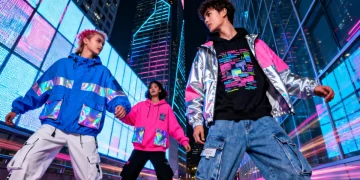
The Y2K era—roughly 1997 to 2003—produced some of fashion’s most polarizing aesthetics. Low-rise jeans, bedazzled accessories, and futuristic metals divided opinion then, but 2026 has embraced them wholesale. This is perhaps the most unexpected chapter of the Retro Resurgence 2026: 5 Decades Influencing Current Fashion Aesthetics story.
What makes Y2K influence so powerful is its connection to digital culture. This was the first generation that grew up online, and their fashion reflected a world介于 the physical and the virtual. In 2026, as augmented reality and digital fashion gain prominence, that dual existence feels remarkably prescient.
Y2K Elements in Modern Context
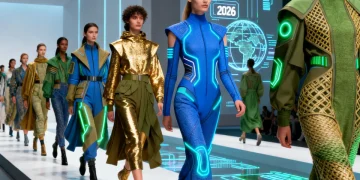
The return of low-rise silhouettes has been one of the most visible Y2K carryovers. But beyond the silhouette, the era’s experimental approach to materials is resonating. Metallic fabrics, transparent plastics, and iridescent finishes appear in collections across the market. These pieces speak to a generation that grew up believing the future would look like something from a music video.
The influence extends to accessories as well. Tiny sunglasses, baguette bags, and bedazzled phone cases all trace directly to Y2K sources. The difference is curation—consumers are picking their vintage references carefully rather than adopting entire eras wholesale.
The Art of Mixing Five Decades
What distinguishes the current moment from previous vintage revivals is the freedom to mix freely across decades. A 70s floral dress might be paired with 90s ankle boots and Y2K-era accessories. The Retro Resurgence 2026: 5 Decades Influencing Current Fashion Aesthetics movement encourages this mixing, treating each decade as a vocabulary rather than a uniform.
This eclecticism reflects how younger generations consume fashion. They did not experience these decades firsthand, so they have no nostalgia for stylistic purity. Instead, they see five decades of fashion as raw material for personal expression. The result is outfits that feel both familiar and entirely new.
Brands have responded by creating collections that explicitly reference multiple eras. A single look might combine 80s tailoring with 90s neutrals and Y2K accessories. These combinations would have seemed chaotic a decade ago, but in 2026, they read as intentional curation.
What This Means
The Retro Resurgence 2026: 5 Decades Influencing Current Fashion Aesthetics phenomenon represents more than a trend cycle. It signals a fundamental shift in how we relate to fashion history. Rather than treating decades as separate entities to be revived one at a time, 2026 is weaving them together into something cohesive.
For consumers, this means unprecedented freedom in building personal style. The rules that once governed fashion—match your decade, avoid conflicting eras—are dissolving. For brands, the challenge is understanding these combinations well enough to serve customers who want it all at once.
The next phase of this movement will likely see even deeper integration. As digital fashion tools improve, the ability to mix and match vintage elements will expand beyond physical clothing. The five decades influencing 2026 may soon become ten, twenty, or more—each available at the tap of a screen.