DIY Fashion Photography: 5 Tips to Showcase Your 2026 Outfits Like a Pro
Advertisement
Mastering DIY fashion photography is essential for showcasing your 2026 wardrobe. This guide reveals five professional techniques anyone can use at home, from lighting setup to styling tricks that elevate everyday outfits into stunning visual content.
DIY Fashion Photography: 5 Tips to Showcase Your 2026 Outfits Like a Pro
The way we document our personal style has fundamentally changed. In 2026, creating eye-catching fashion content no longer requires expensive equipment or professional studios. More Americans are turning their closets into creative studios, using nothing more than smartphones and strategic lighting to produce magazine-worthy images.
Whether you are building a personal brand, selling vintage finds, or simply want to preserve your daily looks with the quality they deserve, understanding the mechanics of professional-grade fashion photography gives you a significant advantage. The good news is that the learning curve has never been flatter, with apps and affordable gear making high-quality results accessible to everyone.
Understanding Natural Light as Your Primary Tool
Natural light remains the most flattering and accessible light source for fashion photography. The key lies in identifying the right time of day and the best window orientation in your home. Morning light, around 8 to 10 AM, produces soft, diffused rays that gently wrap around garments without creating harsh shadows on fabrics.
Position your shooting area near large windows that face north or south to avoid direct sunlight, which creates unflattering contrast. Overcast days are particularly valuable because clouds act as a massive diffuser, producing even lighting that professionals often recreate with expensive softboxes. If you are shooting in the evening, position your outfit near a well-lit area and use white foam boards to bounce light onto shadowed areas.
Advertisement
Working with Available Light Sources
When natural light is insufficient, household lamps become valuable alternatives. Place a lamp with a daylight-balanced bulb at a 45-degree angle to your subject, approximately two feet away. Avoid mixing different color temperatures in a single shot, as this creates color casts that are difficult to correct in editing.
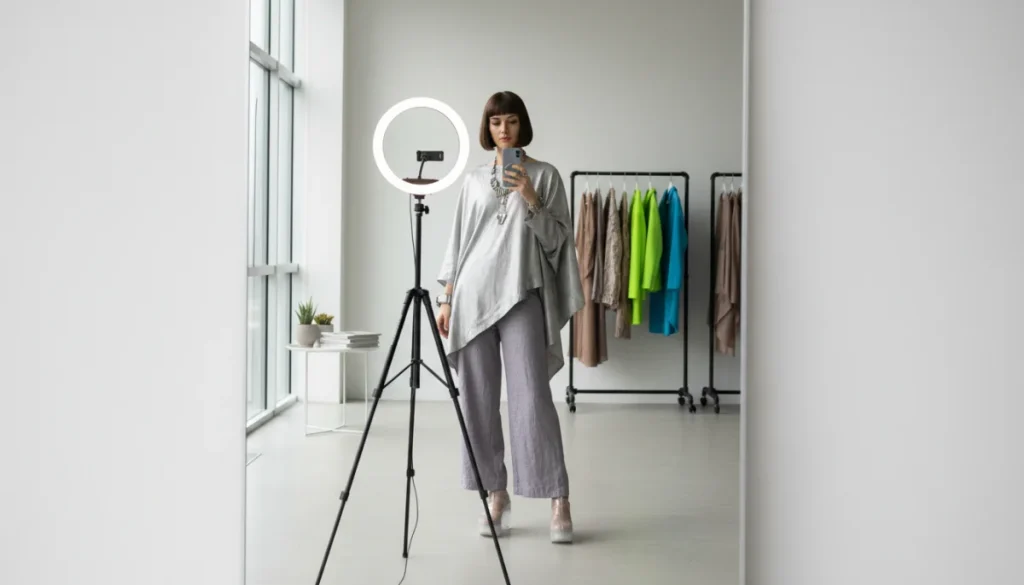
For those serious about consistent results, a ring light or LED panel offers controllable lighting that mimics natural conditions. These tools have become increasingly affordable, with entry-level options available under fifty dollars that deliver professional-quality results for outfit photography.
- Shoot during golden hour for warm, flattering tones
- Use white reflectors to fill in harsh shadows
- Avoid mixed lighting sources in a single frame
- Invest in a basic LED panel for evening sessions
Composition Techniques That Transform Outfit Shots
Composition determines whether a photograph feels amateur or professionally executed. The rule of thirds remains foundational: imagine your frame divided into nine equal sections, then position your subject along these lines or at their intersections. This creates visual balance that draws the viewer into the image naturally.
Advertisement
For full-body outfit shots, leave approximately one-third of space above the subject’s head and ensure the entire outfit is visible from shoes to the top of the frame. Tight crops that cut off ankles or wrists create visual tension that distracts from the garment details you want to highlight.
Experimenting with angles reveals different dimensions of the same outfit. A low-angle shot adds authority and makes the wearer appear more confident, while a slightly elevated angle creates a flattering, elongated silhouette that works particularly well for casual street-style looks.
Framing Your Subject for Maximum Impact
Background selection significantly impacts the final image quality. Busy or cluttered backgrounds compete with your outfit for attention, so choose simple walls, clean floors, or purpose-made backdrop paper available at craft stores for a few dollars. Neutral colors like gray, white, or beige ensure the outfit remains the clear focal point.
Depth of field also matters enormously. Using your smartphone’s portrait mode or adjusting aperture on a DSLR blurs the background, creating that professional bokeh effect that makes your outfit pop. This technique separates the subject from surrounding elements and adds visual polish that distinguishes professional content from casual snapshots.
Styling and Presentation Fundamentals
Even the best photography cannot rescue poorly presented garments. Before clicking the shutter, spend time ensuring the outfit looks its absolute best. Steam or iron all pieces to eliminate wrinkles, as fabric creases photograph dramatically and distract from the overall look.
Pay attention to small details that make big differences: tucked versus untucked shirts, visible underwear lines, loose threads, or mismatched accessories. These elements may seem minor to the naked eye, but they become glaringly obvious in high-resolution images that will be viewed on large screens.
Accessorizing strategically adds dimension to outfit photographs. A statement necklace, carefully chosen bag, or distinctive shoes provide visual interest and help tell the story of the look. However, avoid over-accessorizing, which creates visual clutter and takes focus away from the core ensemble.
Creating Visual Narratives
Great fashion photography communicates mood and personality. Consider the story you want your outfit to tell before photographing it. A bohemian maxi dress suggests wanderlust and artistic sensibility, while a tailored blazer conveys professionalism and confidence. Use props, locations, and expressions that reinforce this narrative.
Grouping items by color or style creates cohesive series that work well for social media feeds. A flat lay of accessories, layered clothing pieces, or multiple angles of the same outfit provides variety that keeps content fresh and engaging for followers who expect regular updates.
Post-Processing Without Overdoing It
Editing is where good photographs become great ones, but restraint is essential. Basic adjustments to exposure, contrast, and white balance correct technical issues and ensure color accuracy. These corrections are part of standard professional workflow and should not be considered cheating.
However, over-editing produces unnatural results that undermine authenticity. Heavy filters, excessive smoothing, or dramatically altered body proportions may generate short-term engagement but damage long-term credibility. Audiences in 2026 have become increasingly sophisticated at detecting manipulated images, and authenticity has become a premium quality in fashion content.
Free editing apps like Snapseed, VSCO, or Lightroom Mobile provide powerful tools for smartphone photographers. Learning a few basic adjustments transforms raw images into polished content without requiring expensive software or extensive technical knowledge.
Building Your Home Photography Studio
Creating a dedicated space for fashion photography eliminates the hassle of setting up for each session. A corner of a bedroom or spare room, approximately six feet by six feet, accommodates most outfit photography needs. This space should have consistent lighting and a neutral background that does not change with seasons or furniture rearrangements.
Essential equipment for a functional home studio includes a smartphone tripod or regular tripod with a phone mount, a ring light or LED panel, neutral-colored backdrop options, and reflectors. Total investment for a basic setup ranges from seventy to one hundred fifty dollars, depending on quality and brand preferences.
Organization matters as much as equipment. Storing your photography gear in one accessible location encourages regular content creation by removing friction from the process. When photographing outfits becomes as easy as pulling out your phone, consistency becomes achievable.
Consistency in Content Creation
Building an audience requires regular posting schedules that followers can anticipate. Establishing a routine, whether photographing new outfits weekly or documenting daily looks, creates momentum that sustains engagement. Batch photography sessions, where you capture multiple outfits in one extended session, distribute content across several days or weeks.
Documenting your process also provides valuable content. Behind-the-scenes glimpses of setup, quick editing tutorials, or before-and-after comparisons perform well on platforms like Instagram and TikTok, where audiences appreciate transparency and learning opportunities.
Looking Ahead: The Future of Fashion Documentation
As we move further into 2026, the barriers between professional and amateur fashion photography continue to dissolve. AI-powered editing tools now automate color correction and composition suggestions, making professional results achievable for anyone with a smartphone and willingness to learn.
The shift toward authentic, relatable content favors those who master fundamentals rather than relying on filters and effects. Understanding lighting, composition, and styling provides a foundation that adapts as technology evolves. These skills transfer across platforms and equipment generations, making them valuable investments regardless of where fashion content creation heads next.
For anyone serious about showcasing their wardrobe effectively, the combination of basic equipment, foundational knowledge, and consistent practice produces results that rival professionally produced fashion content. The opportunity to document personal style with professional quality has never been more accessible.